Restaurant-Style Stir-Fry Sauces: 5 Healthy Recipes for Takeout-Inspired Meals
There is something especially satisfying about ordering a beautifully prepared stir-fry at a restaurant. Crisp vegetables, tender protein, aromatic seasonings, and a glossy sauce come together to create a meal that feels far more elaborate than the time it actually takes to cook. The good news is that many of those restaurant-inspired flavors can be recreated at home with simple ingredients and a few smart cooking techniques.
The stir-fry sauce often makes the biggest difference. It can turn ordinary chicken and vegetables into a savory entrée, give noodles a rich coating, or add a bright finishing touch to seafood. Rather than relying on heavy bottled sauces, homemade versions allow you to control the amount of salt, sugar, and oil while still creating the bold flavors associated with restaurant menus.
The secret to a great restaurant-style stir-fry sauce is balance. Savory ingredients provide depth, vinegar or citrus adds acidity, aromatics such as garlic and ginger bring fragrance, and a small amount of sweetness rounds everything out. Using ingredients like low-sodium soy sauce, fresh ginger, garlic, lime juice, and natural nut butter can create plenty of flavor without making the meal unnecessarily heavy.
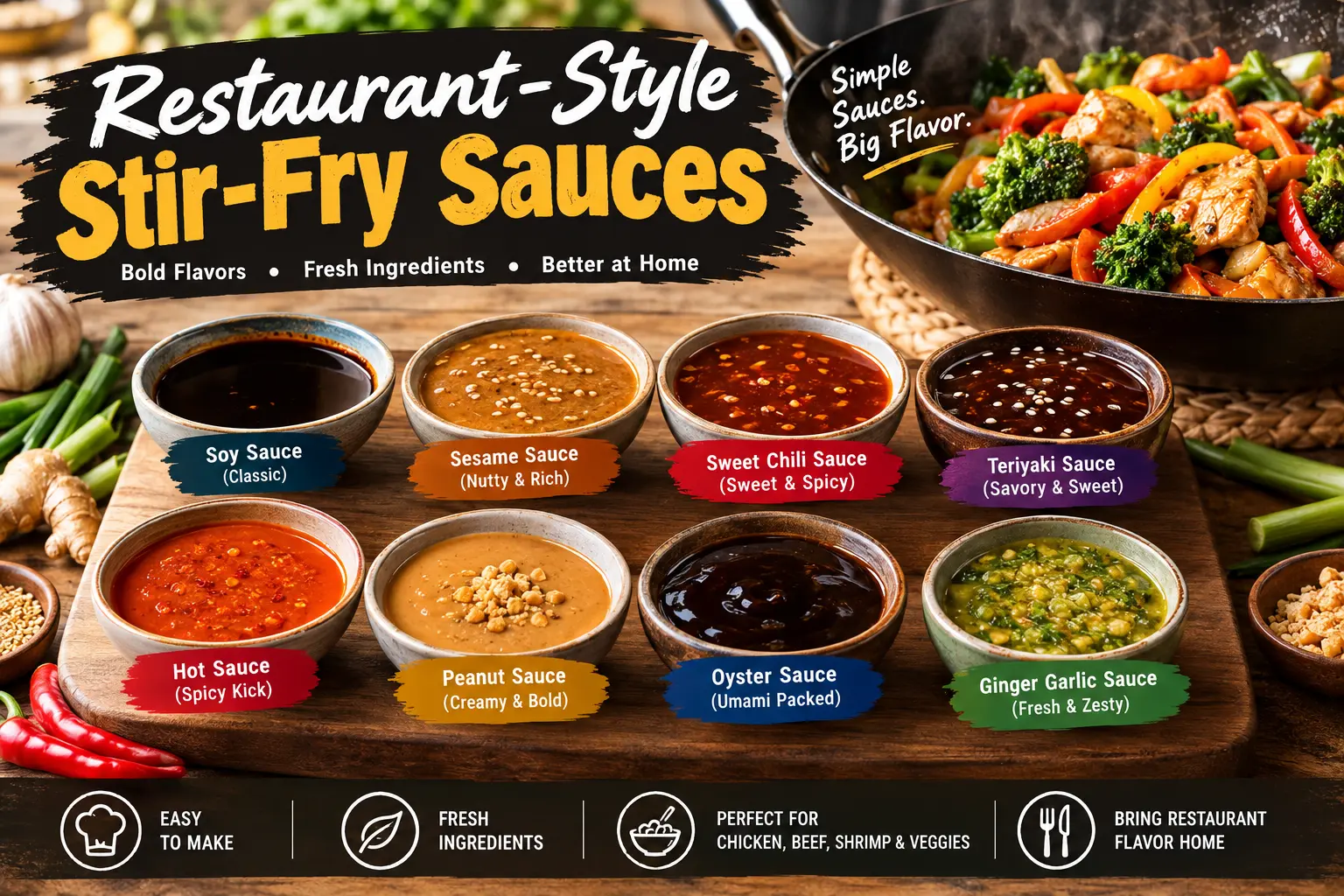
Once you understand those basic flavor combinations, making a homemade stir fry sauce can feel more like designing your own restaurant entrée. The five recipes below each have a different personality, from classic garlic and ginger to spicy and creamy peanut-lime. Pair them with different proteins, vegetables, rice, or noodles to create a varied menu at home.
1. Classic Restaurant-Style Garlic Ginger Sauce
Garlic and ginger are two of the easiest ways to recreate the aromatic quality of a restaurant stir-fry. This sauce has a savory, slightly tangy flavor that works with almost any combination of ingredients.
Ingredients
- 3 tablespoons low-sodium soy sauce
- 1 tablespoon rice vinegar
- 1 teaspoon freshly grated ginger
- 1 garlic clove, finely minced
- 1 teaspoon toasted sesame oil
How to Make It
Whisk all five ingredients together in a small bowl. Let the mixture sit for a few minutes before cooking so the garlic and ginger can infuse the liquid.
For a restaurant-style result, cook your protein separately until lightly browned. Remove it from the pan, then stir-fry your vegetables over high heat. Return the protein to the pan and add the sauce during the final minute or two of cooking.
This combination is excellent with chicken, shrimp, tofu, broccoli, mushrooms, carrots, cabbage, and bell peppers. Serve it over brown rice or a modest portion of jasmine rice for a complete meal.
Menu-Inspired Pairing
Garlic Ginger Chicken with Broccoli and Steamed Rice
This combination has the familiar feel of a restaurant entrée while keeping the ingredient list straightforward.
2. Light Sweet and Spicy Sauce
Sweet and spicy dishes are popular on many restaurant menus because the contrast makes every bite interesting. This homemade version uses a small amount of honey rather than relying on a heavily sweetened bottled sauce.
Ingredients
- 3 tablespoons low-sodium soy sauce
- 1 tablespoon rice vinegar
- 1 teaspoon honey
- 1 teaspoon sriracha
- 1 teaspoon sesame oil
How to Make It
Combine the ingredients and whisk until smooth. Taste before cooking and adjust the amount of sriracha according to your preferred heat level.
Cook your vegetables and protein first, then add the sauce toward the end. Toss continuously for about one to two minutes, allowing the sauce to lightly coat the ingredients.
This works especially well with shrimp, chicken, tofu, broccoli, snap peas, onions, carrots, and bell peppers.
Menu-Inspired Pairing
Sweet and Spicy Shrimp with Colorful Vegetables
Use shrimp, bell peppers, snap peas, and carrots for a colorful combination. Serve with rice or whole-grain noodles and garnish with sliced green onions.
3. Ginger-Lime Sauce for Fresh Seafood
Restaurant menus often balance richer dishes with lighter, citrus-forward options. A ginger-lime stir-fry sauce is ideal when you want a stir-fry that tastes fresh and vibrant rather than heavy.
Ingredients
- 3 tablespoons low-sodium soy sauce
- 1 tablespoon fresh lime juice
- 1 teaspoon grated fresh ginger
- 1 teaspoon honey
- 1 teaspoon sesame oil
How to Make It
Mix the ingredients in a bowl until well combined. Fresh lime juice is important because it gives the sauce a brighter flavor than bottled alternatives.
Cook shrimp or another quick-cooking seafood separately until nearly done. Stir-fry vegetables such as zucchini, broccoli, mushrooms, or green beans, then return the seafood to the pan. Add the sauce just before everything is finished.
The brief cooking time helps preserve the fresh citrus and ginger notes.
Menu-Inspired Pairing
Ginger-Lime Shrimp with Garden Vegetables
Serve the shrimp over brown rice, quinoa, or rice noodles. Add fresh lime wedges and sliced scallions for a polished presentation.
4. Honey Garlic Glaze
A glossy honey-garlic sauce can make a simple protein look and taste like a signature restaurant dish. Using only a small amount of honey keeps the sauce from becoming overly sweet while allowing the garlic and ginger to remain prominent.
Ingredients
- 3 tablespoons low-sodium soy sauce
- 1 teaspoon honey
- 1 tablespoon rice vinegar
- 1 garlic clove, minced
- 1 teaspoon fresh grated ginger
How to Make It
Whisk everything together before adding it to your pan. Cook your protein and vegetables separately until they develop some color.
Once the ingredients are nearly finished, pour in the sauce and toss over medium-high heat. Let it bubble gently for a minute or two until it coats the ingredients with a light glaze.
Avoid cooking it for too long because the stir-fry sauce can become overly concentrated.
Menu-Inspired Pairing
Honey Garlic Chicken with Broccoli and Carrots
For a restaurant-style presentation, arrange the chicken and vegetables over rice rather than mixing everything together. Finish with sliced green onions and a light sprinkle of sesame seeds.
5. Creamy Peanut-Lime Sauce
Peanut-based sauces can give noodles and vegetables a richer, more substantial character. This version uses natural peanut butter for creaminess while lime juice keeps the flavor fresh.
Ingredients
- 2 tablespoons natural unsweetened peanut butter
- 2 tablespoons low-sodium soy sauce
- 1 tablespoon fresh lime juice
- 1 teaspoon honey
- 2 to 3 tablespoons warm water
How to Make It
Whisk the peanut butter, soy sauce, lime juice, and honey together. Gradually add warm water until the sauce becomes smooth and pourable.
Unlike thinner sauces, this one works particularly well when tossed with noodles. Cook whole-grain noodles according to the package directions, then combine them with sautéed cabbage, carrots, bell peppers, and your choice of tofu or chicken.
Add the sauce gradually and toss until everything is evenly coated.
Menu-Inspired Pairing
Peanut-Lime Vegetable Noodles with Crispy Tofu
Pan-sear tofu until golden before adding it to the noodles. Top the finished dish with chopped peanuts, scallions, or fresh cilantro for additional texture and freshness.
How Restaurants Get Better Stir-Fry Results
The stir-fry sauce is important, but cooking technique is what gives a homemade stir-fry its restaurant-style character.
Start by preparing every ingredient before you turn on the heat. Stir-frying happens quickly, so there is little time to chop vegetables or measure sauce once cooking begins.
A large wok or skillet is ideal because it gives the ingredients room to move. Avoid filling the pan too heavily. When vegetables are crowded, they release moisture and tend to steam rather than develop lightly browned edges.
High heat also helps create the contrast between crisp vegetables and tender protein that makes restaurant stir-fries so appealing.
Cook Ingredients in Stages
Not every ingredient should enter the pan at the same time. Start with proteins that require longer cooking, then remove them temporarily if necessary.
Next, add firm vegetables such as carrots and broccoli. Softer ingredients, leafy greens, mushrooms, and thinly sliced peppers can follow later.
Return the cooked protein to the pan before adding the sauce. This allows everything to finish together without leaving delicate vegetables sitting over high heat for too long.
Add the Sauce at the Right Moment
Adding the sauce too early can make vegetables soft and cause the liquid to evaporate before it has a chance to coat everything properly.
For most stir-fries, the final minute or two of cooking is enough. Pour the sauce around the hot pan, then toss the ingredients quickly.
If you want a thicker, glossy coating, allow the stir-fry sauce to bubble briefly. However, avoid excessive cooking, especially with sauces containing citrus or honey.
Make Healthy Meals Look Restaurant-Worthy
Presentation can make even a simple homemade meal feel more special.
Instead of piling everything randomly onto a plate, spoon rice or noodles into the center and arrange the protein and vegetables over the top. Add a few sliced green onions, fresh herbs, sesame seeds, or a lime wedge.
Color also matters. Combining green broccoli, red peppers, orange carrots, and a golden protein creates a naturally appealing plate without requiring elaborate decoration.
Using smaller amounts of sauce can also help keep the dish visually appealing. The goal is to coat the ingredients rather than leave them swimming in liquid.
Healthier Swaps for Restaurant-Style Flavor
You can recreate many restaurant-inspired flavors while making practical ingredient choices.
Choose low-sodium soy sauce when possible, and use sweeteners sparingly. Fresh garlic, ginger, citrus, chili, and herbs can provide significant flavor without depending on excessive salt or sugar.
For protein, rotate between chicken, shrimp, fish, tofu, and lean cuts of meat. Include several vegetables to add color, texture, and variety.
You can also experiment with whole grains such as brown rice or quinoa, or use a moderate serving of noodles alongside plenty of vegetables.
Create a Restaurant-Style Menu at Home
One advantage of making several sauces is that you can create an entire week of different meals without purchasing dozens of ingredients.
Start with the garlic-ginger sauce for chicken and broccoli. Later, use the sweet and spicy version with shrimp and peppers. A ginger-lime combination can transform tofu or seafood, while the honey-garlic sauce works beautifully with chicken and vegetables.
The peanut-lime sauce can finish the week with a noodle-based meal.
The ingredients may overlap, but changing the sauce creates a completely different dining experience.
Final Thoughts
Restaurant-style stir-fries do not require complicated techniques or a pantry full of specialty ingredients. The right combination of fresh ingredients, high-heat cooking, and a balanced homemade sauce can turn everyday foods into meals that feel worthy of a restaurant menu.
The key is to focus on flavor contrast. Combine savory ingredients with acidity, aromatic garlic and ginger with a touch of sweetness, and fresh vegetables with satisfying protein. Keep the sauce balanced rather than overly heavy, and give each ingredient enough room in the pan to develop its own texture.
With these five sauces in your recipe collection, you can create everything from garlic-ginger chicken to spicy shrimp, citrusy seafood, honey-garlic vegetables, and creamy peanut noodles. It is an easy way to bring restaurant-inspired variety to your own kitchen while keeping meals fresh, customizable, and practical.