Dunkin’ Donuts Allergen Menu 2026
Eating out with food allergies can feel stressful, especially when you are grabbing a quick coffee or breakfast on the go. If you or someone in your family has a food allergy, knowing what is safe to eat at a popular chain is very important. This guide is made for USA customers who want clear, honest, and updated details about the allergen menu in 2026. You will be able to read through each section and find the safest choices for your morning run. From coffee and donuts to wraps and muffins, this article covers every corner of the menu so you can order with more peace of mind.
What Is the Dunkin’ Donuts Allergen Menu?
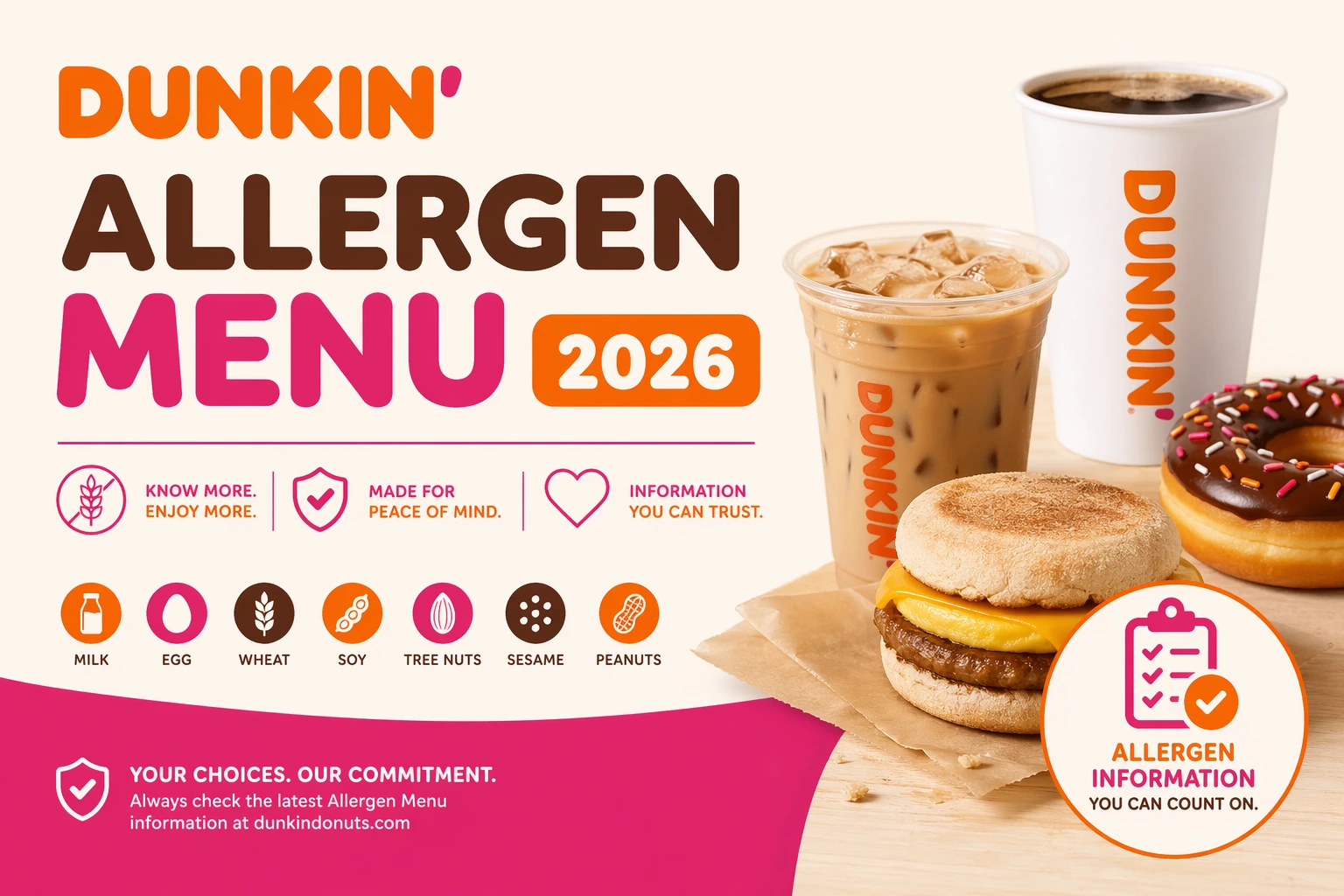
The allergen menu is a detailed list that shows which ingredients in each food and drink item may cause an allergic reaction. It is created to help customers with food sensitivities make smart choices before placing an order. You can be able to check which items contain milk, eggs, wheat, soy, peanuts, tree nuts, fish, shellfish, and sesame.
Understanding Dunkin’s Allergen Policy
The company has a clear policy about sharing ingredient information with customers. They know that many Americans live with food allergies, and they try to be open about what goes into their products. Still, there are limits to how safe any fast-food chain can make its food for allergy sufferers.
The policy is built on three main ideas: listing allergens clearly, warning about cross-contact, and giving customers the power to choose wisely. Below, you will find a deeper look into how this policy works in real life.
The 9 Major Allergens You Can Identify at Dunkin’
The FDA in the USA has named nine major food allergens that must be labeled on packaged foods. These same allergens are the focus of the allergen guide. You can be able to spot them easily when you read the menu chart.
The 9 major allergens are:
- Milk
- Eggs
- Wheat
- Soy
- Peanuts
- Tree Nuts (like almonds and cashews)
- Fish
- Shellfish
- Sesame (added in 2023 under the FASTER Act)
Each menu item is checked against this list. If any of these allergens are used in the recipe, it will be marked with a clear symbol or note.
Dunkin’ Donuts Beverage Allergen Information
Drinks are a huge part of any visit, and many customers think coffee is always safe. That is not fully true because flavor swirls, milk, and toppings can bring hidden allergens. Below is a breakdown of each main drink type and what you should watch out for.
Hot Coffee & Espresso Drinks
Hot coffee by itself is usually free from the nine major allergens. However, once you add milk, cream, sugar, or swirls, the allergen list grows quickly. Espresso drinks like cappuccinos and lattes are made with steamed milk, which means they contain dairy unless you swap for a non-dairy option.
Some popular hot drinks and their common allergens include:
| Drink | Common Allergens |
| Black Hot Coffee | None |
| Hot Latte | Milk |
| Cappuccino | Milk |
| Mocha Latte | Milk, Soy |
| Caramel Macchiato | Milk |
Always ask for plain coffee if you want the safest choice, and add your own milk or sweetener at the self-serve counter.
Cold Brew Coffee
Cold brew is a smooth, less bitter coffee brewed slowly with cold water. On its own, plain cold brew is free from major allergens. The issue comes when you add flavor swirls, cream, or milk-based foam.
Keep in mind that:
- Plain cold brew is dairy-free and vegan.
- Sweet cold foam usually contains milk.
- Flavored shots may contain soy or milk traces.
If you are sensitive, order plain cold brew and add your own non-dairy milk at home or ask for oat milk in-store.
Iced Latte
Iced lattes are made with espresso and cold milk over ice. Since milk is a main ingredient, these drinks are not safe for people with a milk allergy unless you swap the milk. You can be able to ask for oat, almond, or coconut milk instead.
Flavor options like vanilla, caramel, or mocha add extra ingredients. Always check whether the syrup contains milk, soy, or nuts before ordering a flavored version.
Iced Macchiato
An iced macchiato is layered with milk, ice, and espresso shots poured on top. It is very rich and creamy, but it is loaded with dairy. If you swap in oat or almond milk, you can still have a similar taste without the milk allergen.
Watch out for caramel drizzles and swirl flavors, which may add soy or milk-based ingredients.
Frozen Coffee
Frozen coffee is blended with ice, coffee, dairy, and sugar. It is creamy and cold, but it almost always contains milk. The blender used to make frozen drinks is often shared with other dairy-based drinks, which raises the risk of cross-contact.
If you are milk-free, ask if the blender can be rinsed, and request a non-dairy base. Some flavors may still contain soy lecithin, so double-check before ordering.
Coolatta
This is a slushy-style drink made with fruit flavors and ice. Most coolatta flavors do not contain milk, but some may have soy or artificial flavors. The strawberry coolatta is often one of the safer picks for customers avoiding dairy.
Here is a quick look:
- Strawberry Coolatta: Usually dairy-free
- Blue Raspberry Coolatta: Usually dairy-free
- Vanilla Bean Coolatta: Contains milk
Check the menu chart each time because seasonal flavors change often.
Frozen Chocolate
Frozen chocolate is a sweet, blended drink that tastes like a chocolate milkshake. It contains milk, cocoa, sugar, and sometimes soy. People with milk or soy allergies should avoid this one.
If you want a chocolate fix without the dairy, ask for plain iced coffee with a non-dairy milk and a dash of unsweetened cocoa if available.
Flavor Swirls
Swirls are thick, sweet flavor mixes added to drinks. They are very popular but come with hidden allergens. Most swirls contain milk and soy, and some include nuts or artificial flavors.
Common swirl flavors include:
- Caramel Swirl (milk, soy)
- Mocha Swirl (milk, soy)
- Hazelnut Swirl (may contain tree nuts)
- French Vanilla Swirl (milk, soy)
If you have milk or tree nut allergies, it is safer to skip swirls or ask for unsweetened flavor shots instead.
Refreshers & Teas
Refreshers are fruity, caffeinated drinks made with green tea and fruit flavors. Most are dairy-free when ordered with water or coconut milk. If you ask for them with regular milk, they will contain dairy.
Refreshers are often a safer pick for people with milk allergies, but always check the syrup list for soy or other hidden ingredients.
Tea & More at Dunkin’
Hot and iced teas are simple and often free from major allergens when ordered plain. Green tea, black tea, and chai tea are common options. Chai lattes, however, are made with milk and chai concentrate, which may include soy.
Safer tea picks:
- Plain hot or iced black tea
- Plain green tea
- Unsweetened iced tea
Avoid chai lattes and flavored tea drinks if you are avoiding dairy or soy.
Dunkin’ Donuts Food Allergen Information
Food items tend to carry more allergens than drinks because they are baked with wheat, eggs, milk, and soy. Below is a clear breakdown of each food group so you can plan your order ahead of time.
Donuts
Donuts are the signature item, and most of them contain wheat, milk, soy, and eggs. Some also carry tree nuts or peanuts through shared equipment. Glazed, chocolate, and jelly donuts are the most common, but each has its own list of allergens.
A general rule: almost all donuts contain wheat and soy. Many contain milk and eggs, and some carry cross-contact with nuts.
Munchkins (Donut Holes)
Munchkins are small, bite-sized donuts that come in many flavors. They share the same allergen profile as regular donuts. Wheat and soy are almost always present, and many varieties contain milk and eggs.
Because they are scooped from shared trays, cross-contact between flavors is very common. If you have a severe allergy, munchkins may not be the safest pick.
Muffins
Muffins are soft, sweet, and come in flavors like blueberry, chocolate chip, and coffee cake. They usually contain wheat, milk, eggs, and soy. Some kinds, like the coffee cake muffin, may also contain tree nuts.
Check the chart carefully, as newer muffin flavors are added often. Seasonal muffins may have different ingredients than year-round ones.
Bakery Items (Cookies, Croissants, Bagels)
This group includes cookies, croissants, bagels, and pastries. These baked goods are usually packed with common allergens.
Here is what to keep in mind:
- Cookies: Contain wheat, milk, eggs, and soy. Some have nuts.
- Croissants: Contain wheat, milk, eggs, and soy.
- Bagels: Most plain bagels contain wheat and soy. Everything bagels have sesame.
- Hash browns: Often fried in shared oil, so watch for cross-contact.
If you have a sesame allergy, skip the everything bagel and ask about shared equipment used for all bagels.
Breakfast Sandwiches
Breakfast sandwiches are built with eggs, cheese, meat, and bread or bagels. Almost all of them contain wheat, milk, eggs, and soy. The meat options include bacon, sausage, and ham.
If you avoid dairy, ask for a sandwich without cheese. If you avoid eggs, you will be limited to meat-only options on a plain bagel or English muffin. Always check for soy in processed meats.
Dunkin’ Wraps
Wraps are rolled in a flour tortilla and filled with eggs, cheese, or meat. The tortilla itself contains wheat and soy. Most wraps also contain milk and eggs from the fillings.
Common wrap allergens:
| Wrap Type | Main Allergens |
| Egg & Cheese Wrap | Wheat, Milk, Eggs, Soy |
| Bacon Wrap | Wheat, Milk, Eggs, Soy |
| Sausage Wrap | Wheat, Milk, Eggs, Soy |
Wraps are not a great choice for anyone with a wheat or gluten sensitivity.
Snack Items & Sides
Sides include hash browns, stuffed bagel minis, and sometimes seasonal snack items. Hash browns are usually free from milk and eggs but may be fried in shared oil that carries other allergens. Stuffed bagel minis contain wheat, milk, and soy.
Always ask the staff if fryers are shared between different menu items.
Dairy-Free and Vegan Options You Can Order at Dunkin’
Many USA customers now follow dairy-free or plant-based diets. Thankfully, the menu has grown to include more options for these lifestyles. You can be able to find drinks and a few food items that skip animal products.
Dairy-Free Milk Alternatives Available
The chain offers a few non-dairy milk choices across most USA locations. These are perfect for people with milk allergies or those following a vegan diet.
The main dairy-free milk options include:
- Oat Milk: Creamy and slightly sweet, great in lattes.
- Almond Milk: Light and nutty, contains tree nuts.
- Coconut Milk: Sweet tropical taste, dairy-free and nut-free.
Just remember that almond milk is not safe for tree nut allergies, and oat milk may carry trace gluten depending on the brand used.
Vegan-Friendly Menu Items
Vegan options are limited but growing. Most vegan choices are drinks rather than food. A few plant-based items have been tested in select USA markets, but the regular menu focuses more on coffee-based vegan picks.
Common vegan-friendly picks:
- Plain black coffee or espresso
- Iced black coffee
- Plain cold brew
- Coffee or latte with oat or coconut milk
- Plain bagel (ask about shared equipment)
- Hash browns (ask about shared fryers)
Food items with eggs, cheese, or butter are not vegan.
Why You Should Check Syrups Before Ordering
Syrups and swirls look harmless, but they often contain milk, soy, or other hidden ingredients. A flavor shot is usually made with sugar and natural flavoring, which is often safer. Swirls, on the other hand, are thick and creamy because they contain dairy.
Before ordering any flavored drink, ask:
- Is this a syrup or a swirl?
- Does it contain milk or soy?
- Is it made with nuts?
Asking these questions takes only a few seconds and can save you from a reaction.
Swirls to Avoid If Sensitive to Milk
Most swirls carry milk, so they are not safe for people with a dairy allergy. The swirls you should avoid include:
- Caramel Swirl
- Mocha Swirl
- French Vanilla Swirl
- Hazelnut Swirl
- Pumpkin Swirl (seasonal)
Instead, choose unsweetened flavor shots, which are more likely to be dairy-free. Always confirm with the staff before ordering.
Highlights & Allergen Menu Changes in 2026
The year 2026 has brought a few updates to how allergens are shared with USA customers. These changes aim to make the ordering experience clearer and more fair for people with dietary needs.
Removal of the Non-Dairy Milk Surcharge
One of the biggest wins for allergy sufferers has been the removal of the extra fee for non-dairy milk. In the past, swapping regular milk for oat, almond, or coconut milk meant paying more. Now, these swaps are free at most USA locations, which makes life easier for people with milk allergies.
This change matches similar moves by other big coffee chains in the USA and shows a step toward fair pricing for all customers.
Better Allergen Labeling & PDF Guides
The official allergen PDF has been updated with clearer layouts and easier-to-read charts. Each item now has a direct column match for each of the nine major allergens. Footnotes about cross-contact are also more detailed than before.
You can be able to download the latest PDF from the official website or ask for a printed copy at the store.
Persistent Limitations You Should Know
Even with better labeling, some limits still exist. Shared equipment is still used in most kitchens, and no item can be promised as 100% allergen-free. Seasonal items sometimes roll out before the PDF guide is updated, which means you may need to ask staff directly.
Other ongoing limits include:
- No gluten-free donuts or muffins
- No nut-free kitchen space
- No allergen-free prep stations
Always plan ahead and carry your own allergy card if needed.
Quick-Reference Allergen Rundown by Product Category
Here is a simple reference table to help you spot common allergens across product categories. Use this as a quick glance before your next visit.
| Category | Milk | Eggs | Wheat | Soy | Tree Nuts |
| Donuts | Yes | Yes | Yes | Yes | Possible |
| Munchkins | Yes | Yes | Yes | Yes | Possible |
| Muffins | Yes | Yes | Yes | Yes | Possible |
| Bagels | Possible | No | Yes | Yes | No |
| Wraps | Yes | Yes | Yes | Yes | No |
| Sandwiches | Yes | Yes | Yes | Yes | No |
| Hot Coffee (plain) | No | No | No | No | No |
| Latte | Yes | No | No | Possible | Possible |
| Cold Brew (plain) | No | No | No | No | No |
| Refreshers (plain) | No | No | No | Possible | No |
| Coolatta (most) | No | No | No | Possible | No |
| Tea (plain) | No | No | No | No | No |
FAQs
Does Dunkin’ Have Gluten-Free Donuts or Muffins?
No, there are no gluten-free donuts or muffins on the current menu. All baked goods contain wheat, and the kitchen uses shared equipment, which makes cross-contact likely. If you have celiac disease or a severe wheat allergy, you should skip all bakery items.
Your safer picks include plain coffee, plain tea, and hash browns, though you should still ask about shared fryers.
Are Any Dunkin’ Drinks Dairy-Free?
Yes, many drinks are dairy-free when ordered plain. These include black coffee, cold brew, espresso, tea, and refreshers. You can also swap dairy milk for oat or coconut milk in lattes and iced drinks.
Just remember that most swirls contain milk, so stick to unsweetened flavor shots or plain versions.
Does Dunkin’ Use Shared Equipment?
Yes, shared equipment is used in almost every store. Blenders, coffee pitchers, trays, ovens, and fryers are often shared across many menu items. This means no item can be promised to be 100% allergen-free.
If you have a severe allergy, always ask staff to use fresh tools and clean surfaces.
Are Dunkin’ Munchkins Nut-Free?
Munchkins are not promised to be nut-free. While some flavors do not contain nuts as an ingredient, they are made and stored with other items that may contain nuts. Cross-contact is a real risk.
If you have a tree nut or peanut allergy, it is safer to skip munchkins altogether.
What Is the Safest Option for People With Severe Allergies?
The safest option is a plain black coffee, plain espresso, or plain hot tea with no added milk, swirls, or flavorings. These drinks use the fewest ingredients and have the lowest cross-contact risk.
You should also tell the staff about your allergy, ask for fresh gloves, and carry your epinephrine injector at all times.
Can You Customize Orders to Be Allergen-Free?
You can customize many drinks by swapping milk, skipping swirls, or asking for unsweetened flavor shots. However, food items are harder to customize because most are made ahead of time.
For baked goods, customization is very limited. Always ask the staff what changes are possible before ordering.
Where Can You Find Dunkin’ Allergen Info in USA Stores?
You can find allergen info in three main places: the official website, the mobile app, and a printed binder at most stores. The website has the most updated PDF guide. Staff can also pull up ingredient info on their store system if you ask.
Conclusion
Living with food allergies does not mean you have to give up your favorite coffee run. With the right info and a bit of planning, you can be able to enjoy a safe and tasty visit every time. The allergen menu is a helpful tool that lists ingredients clearly and warns about cross-contact risks. Stick to simple drinks, ask clear questions, and always check the latest PDF guide before you order.
USA customers now have more options than ever, including free non-dairy milk swaps and better labeling. Still, shared equipment and limited gluten-free options mean you must stay alert. Use this guide as your go-to resource, save it for future visits, and share it with friends and family who also deal with allergies. With smart choices and clear communication, your next coffee run can be both fun and safe.